
Your cousin sends you the TikTok at 11:47 p.m.
No caption. Just the video and three crying-laughing emojis. It’s a girl about your age looking dead into the camera while text floats over her head: “Are you the eldest daughter, or are you normal?”
And underneath it: “THIS IS SO YOU 😭😭”
You watch it. It is so you. The girl in the video is describing your childhood. She’s describing the way you scan a room before you sit down in it.
You send back “lol why is this accurate” and put your phone face down.
And then you lie there feeling something you don’t have a word for. Because you just got seen by two million strangers and one cousin.
So why do you feel flat?
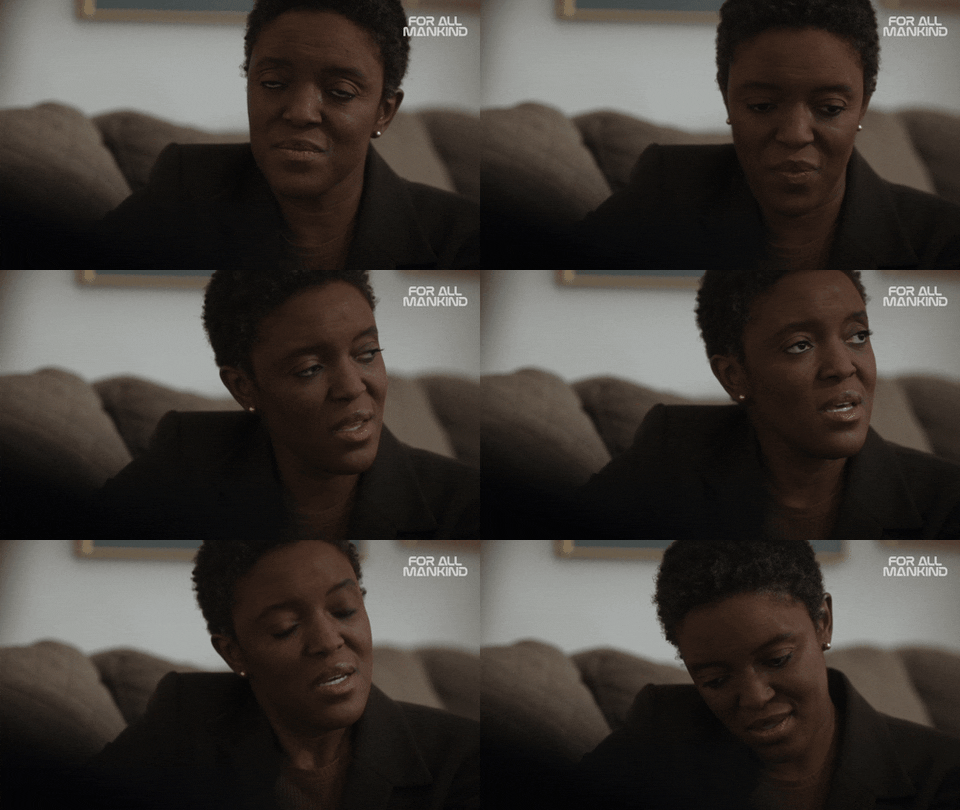
Because being recognized and being cared for are two different experiences.
Your whole personality is trending
If you’ve been anywhere near the internet this year, you know: we are having a moment.
Suddenly we’re everywhere. Therapists are making TikToks about us. Think pieces keep appearing. Podcasts are debating whether we’re even real. Meme after meme.
Somewhere right now, a girl who has never met you is describing your interior life to her front-facing camera, and the comments are full of women typing “I feel so seen” from the same couch where they’ll get up in ten minutes to handle something for somebody.
Your role, the one you’ve been carrying since before you could spell responsible, has a hashtag now. It has discourse.
There’s something strangely disorienting about watching the role you’ve lived become content.
People laugh because it’s relatable. They tag their sisters, their cousins, the friend who’s basically their sister. And sometimes you’re laughing too, because people are creative and funny!
Multiple things can be true at the same time, being a trend is not the same as being understood.
Seen by the algorithm, unseen at Sunday dinner
Here’s what the meme can’t do.
It can’t sit at your family’s table. It isn’t there when your mother hands you the phone because the insurance company is on the line and “you explain things better.”
It doesn’t step into the family group chat when everything catches fire at 9 p.m. on a Thursday work night. And it certainly doesn’t notice that you’re tired before you say you’re tired.
Two million strangers can validate you and your own family can still not see you. Both of those things are true on the same night. In the same hour.
That’s the flatness. That’s the thing you couldn’t name at 11:47 p.m.
Because the girl in the video is describing your role. But your role was never the whole of you. And there’s a particular loneliness in being recognized for the job while the person doing the job stays invisible, even to the people you do it for. Sometimes especially to them. Especially when it does not change.
The videos can describe what you do. They rarely capture what it costs.
They don’t show the guilt that arrives the moment you think about saying no. The quiet pride you take in being dependable. The resentment you immediately feel guilty for feeling. The love woven through all of it, making it harder, not easier, to put anything down.
That’s why a sixty-second video can feel deeply accurate and still leave you feeling profoundly alone.
When the Trend Doesn’t Look Like Your Family
I say this with love for every eldest daughter of every background, because this table is long and there’s room:
A lot of this coverage doesn’t quite look like our families.
If you’re a Black eldest daughter, if your family’s story runs through Harlem or Kinshasa, London or Salvador, Port-au-Prince or Jackson, Mississippi, you might watch these videos and feel seen at 80%. The responsibility, yes. The hypervigilance, yes.
But not the way serving family isn’t just expected but sacred. Not the “strong one” armor that got welded on before you had a say. Not the way you translate, not just language, but systems, culture, feelings, for people you love.
You’re in the trend. You’re just rarely in the frame.
I can only write from where I stand, and I stand as a Black eldest daughter. So that’s the family I’ll name here. But if yours runs through Manila or Guadalajara or Chennai, I suspect a lot of this rhymes. The details change. The weight doesn’t.

And being partially seen can be lonelier than not being seen at all.
(We’re going to spend real time here, I promise. This space was built for you.)
Recognition Isn’t Relief
You’ve probably seen the “is it even real, is it a syndrome” debate flaring up and I have thoughts, which I’ll get into properly in the next post, because you deserve better than an argument about whether your exhaustion has the right paperwork.
The flatness you feel when the meme is accurate but nothing changes? That’s not ingratitude. That’s not you being impossible to please.
That’s the correct response to being recognized without being relieved.
Visibility is not the same as help. A hashtag doesn’t do the dishes. A viral video doesn’t answer the insurance call. Feeling seen for thirty seconds doesn’t reassign the mental load you’ll pick back up before your feet hit the floor tomorrow.
Maybe what you’ve been longing for all along isn’t applause for how much you carry. Maybe it’s someone willing to carry some of it with you.
Imagine if the next family phone call wasn’t automatically yours to answer. Imagine someone noticing you were exhausted before you had to explain it. Imagine the weight becoming just a little lighter.
You don’t need your life to trend. You need it to change, in small, specific, Tuesday-sized ways. And that’s exactly where we’re going in the next blog post.
Gathering Eldest Daughters is where eldest daughters come to name what they’ve been holding.
Until the next gathering, rest when you can. Take up space. Exhale fully.